Posts

Boxing Day

Image
Boxing Day  is traditionally the day following Christmas Day, when servants and tradesmen would receive gifts from their bosses or employers, known as a "Christmas box". Today, Boxing Day occurs on 26 December (or the first weekday after Christmas Day, depending on regional laws). It is observed in Canada, United Kingdom, Hong Kong, Australia, New Zealand, South Africa and some other Commonwealth nations. HISTORY  - It was started in the UK about 800 years ago, during the Middl e Ages. It was the day when the alms box, collection boxes for the poor often kept in churches, were traditionally opened so that the contents could be distributed to poor people. Some churches still open these boxes on Boxing Day. It might have been the Romans that first brought this type of collecting box to the UK, but they used them to collect money for the betting games which they played during their winter celebrations! In Britain, it was a custom for tradesmen to collect "Christmas boxes...

Devara Dasimayya Jayanti

Image
Devar Dasimayya was a mid-11th century  poet  in  Kannada . He is said (by whom) to have been born in Mudanuru, a village in Shorapur Taluk, Yadgir district in Karnataka. Mudanuru village is rightly of  temples . His village has Ramanath temple among its many temples, dedicated to  Shiva  as worshiped by  Rama , the epic hero, an incarnation of  Vishnu . He was a strong devotee of Ramanath. Devar Dasimayya composed  vachanas  in the name of his god Ramnath. He was an early propagator of the Lingayath faith, which preceded Basavanna and Akka Mahadevi. Dasimayya was performing intense  ascetic  practices in a  jungle , when he claimed  Shiva  appeared to him. He allegedly told him to work in the practical world. As a result, Dasimayya renounced his practices and took up the trade of a  weaver . He is also known as Jedar Dasimayya, “Dasimayya of the weavers”. Today there is a large community of weavers cal...

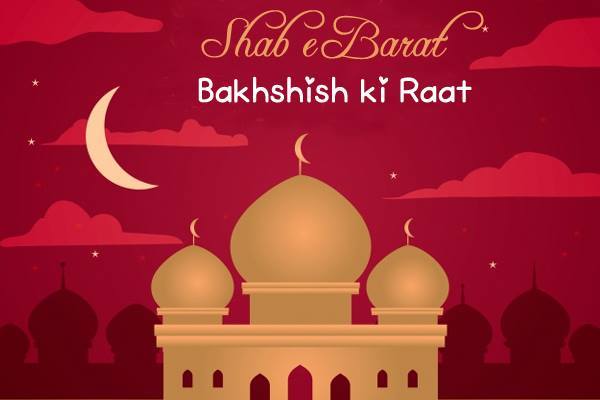
Shab-e-barat

Image
Shab-e-barat or Barat Night, is a Muslim holiday celebrated on the 15th night, the night between 14 & 15 of the month of Sha'ban, the eighth month of the Islamic calendar. It commemorates the entry of Muhammad into the city of Mecca. The Arabic name "Laylat al-Barat" (Arabic: ليلة البراءة‎) means Barat Night where "البراءة" meaning in English is "the quality of being guileless", "without guile or deception". On this night Allah said : ` who wants forgiveness, I will forgive you. Who wants food, I will provide food.` Allah said this over again and again until Fajr.[citation needed] The festival of Shab-e-Barat is celebrated with pomp and enthusiasm by Muslims, mainly in South Asia. For, Muslims believe that on the night of Shab-e-Barat, God writes the destinies of all men and women for the coming year by taking into account the deeds committed by them in the past.It is of hight value to Sunni Muslims It is considered one of the holiest n...

Sourmana Yugadi

Image
The solar  New Year Day, which is  the first day of the month of Mesha (Aries) or Chittirai, is celebrated as Chitravisu. This heralds the arrival of spring.   On this day they also eat Neem leaves with Jaggery signifying that pain and pleasure should be accepted with a sense of equanimity. Bisu, also known as Tulu New Year, is the first day of Tuluva Calendar followed in Tulunadu regions of Karnataka. The entire stretch of Udupi, Mangalore, Dakshina Kannada and parts of Kasargod follows the the Souramana Panchanga (Solar Calendar) hence this festival is also referred to as Souramana Ugadi. Bisu is the period of transition of seasons where Suggi month ends and the Paggu month begins. This day is also referred to as Mesha Sankranthi (Mesha Sankramana punyakala) as the Sun transits from Mesha Rashi from Meena Rashi. The celebrations include reading of the Panchanga and the Ugadi message  after which Bevu-Bella is shared greeting and wishing each others. In Tulu...

Ganesha Chaturthi

Image
This festival is observed in the lunar month of bhadrapada (a Hindu month), shukla paksha chathurthi (fourth day of the waxing moon period), madhyahana vyapini purvaviddha. Typically, the day falls sometime between August and September. The festival lasts for 10 days, ending on Ananta Chaturdashi. Ganesha, the elephant-headed son of Shiva and Parvati, is the supreme god of knowledge, wisdom, prosperity and good fortune. He is the Lord who is first worshipped before any holy occasion or puja. Lord Vinayaka is revered as the preserver of all good things and prevents Vigna (meaning obstruction/bad omen). His motto is Shubh-Laabh (good prospect and good prosperity). Significance of Ganesha Festival According to the Holy Hindu scriptures, Lord Ganesha or Ganapati (the names mean “Lord of Ganas”, Ganas are the worshipers of Lord Shiva. According to the legend, Lord Shiva, the Hindu God of resolution, was away at a war. Pavarti, his wife wanted to bathe. She had no one to guard the door...

Kanakadasa Jayanti

Image
Kanakadasa Jayanthi is a festival celebrated by people of Karnataka in general and Kuruba Gowda community in particular. It is celebrated every year on the birth anniversary of the great poet and saint shri Kanaka Dasa. In tribute to the great saint, the Government of Karnataka has declared the birthday of Kanaka Dasa as a state holiday. All the government offices, schools and colleges around the state celebrate the birth anniversary of Shri Kanaka Dasa as a tribute to one of the great social reformers of Karnataka. Kanaka Dasa (1509 – 1609) was a Haridasa, a renowned composer of Carnatic music, poet, philosopher and musician. He is known for his Keertanas and Ugabhoga, compositions in the Kannada language for Carnatic music. Like other Haridasas, he used simple Kannada language and native metrical forms for his compositions. Originally named Thimmappa Nayaka, Dasa belonged to a chieftain Kuruba Gowda caste of Kaginele in Haveri district. He was born in Baada village, near Bankapu...

Gurunanak Jayanti

Image
Guru Nanak (Punjabi: ਗੁਰੂ ਨਾਨਕ (Gurmukhi); گرو نانک (Shahmukhi); Gurū Nānak; [gʊɾuː naːnəkᵊ], About this soundpronunciation; born as Nanak on 15 April 1469 – 22 September 1539), also referred to as Baba Nanak ('father Nanak'), was the founder of Sikhism and is the first of the ten Sikh Gurus. His birth is celebrated worldwide as Guru Nanak Gurpurab on Katak Pooranmashi ('full-moon of the Katak'), i.e. October–November. Nanak is said to have travelled far and wide across Asia teaching people the message of ik onkar ( ੴ , 'one God'), who dwells in every one of his creations and constitutes the eternal Truth. With this concept, he would set up a unique spiritual, social, and political platform based on equality, fraternal love, goodness, and virtue. Nanak's words are registered in the form of 974 poetic hymns, or shabda, in the holy text of Sikhism, the Guru Granth Sahib, with some of the major prayers being the Japji Sahib (jap, 'to recite'; ji a...